
1. Document the AC Load
List the equipment expected to operate at the same time and record its normal operating demand.
A pure sine wave inverter converts battery DC into AC output with a smooth sine-wave form. For B2B selection, document the battery platform, continuous load, startup demand, AC output, runtime and installation requirements before comparing models.
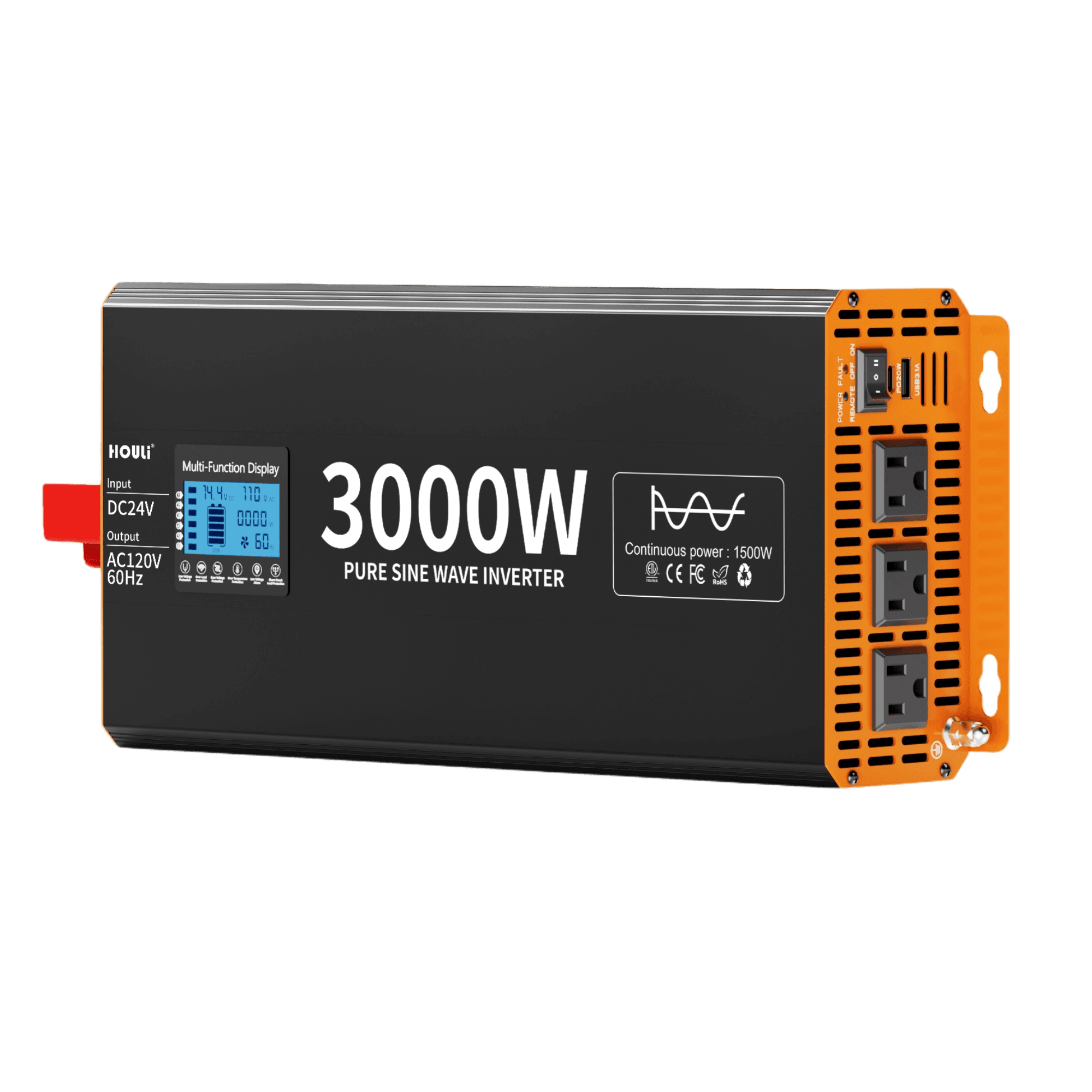
A single power number is not enough to confirm product fit. Work through the electrical system and intended use in sequence.
List the equipment expected to operate at the same time and record its normal operating demand.
Motors, compressors and some power supplies can require more power during startup than during steady operation.
The inverter input must match the battery architecture. Do not select the input voltage from wattage alone.
Verify the voltage, frequency and socket required by the equipment and U.S. market application.
Inverter wattage does not determine runtime by itself. Usable battery energy and operating duty also matter.
Cable size, cable length, fuse protection, ventilation and mounting depend on the selected model and installation.
The correct DC input follows the battery platform. It is not a general upgrade choice and should not be changed without reviewing the complete electrical system.
Common in RV, camper and selected vehicle systems. Confirm the higher DC current that can accompany larger AC loads.
Common in truck, APU and other higher-voltage battery platforms. At the same power, DC current is generally lower than in a 12V system.
Confirm voltage, frequency and socket against the equipment, destination market and exact reviewed configuration.
Continuous power supports the equipment expected to operate steadily. Peak power is a short-duration capability that may support startup demand from compressors, motors or power supplies.
Do not select a model only from the largest wattage printed on a label. Compare the verified continuous rating, peak rating and intended load.
Use the public product direction and application pages to prepare the system brief, then ask HOULI to confirm an exact model and document set.
See the buyer-input and supplier-confirmation matrix for 12V and 24V product review.
Open WR SeriesSubmit the battery platform, continuous load, startup demand, target output and required documents.
Contact HOULIReview RV, van, truck, commercial vehicle, off-grid backup and field-power requirements.
Explore ApplicationsA pure sine wave inverter converts battery DC into AC output with a smooth sine-wave form. Product fit still depends on the required voltage, frequency, continuous load, startup demand and installation.
Start with the loads expected to run together, separate continuous demand from startup surge, and then confirm battery voltage, expected runtime, cable length and installation conditions.
The inverter input must match the battery system. At the same power, a 24V system generally operates at lower DC current, but the complete battery and charging architecture must be reviewed.
No. Continuous power is the operating rating used for steady loads. Peak power is a short-duration capability that may support startup demand and must not be treated as the continuous rating.
Final cable and fuse requirements depend on the exact model, DC current, cable length and installation method. Use the applicable manual and a qualified system review.
Still comparing output waveforms? Read the pure sine wave vs modified sine wave procurement guide before preparing the supplier brief.
The Sales Team can coordinate a product review after receiving the input voltage, output requirement, continuous load, startup demand, quantity and destination market.